
Shockwave therapy in cammeray, sydney - EMS Swiss Dolorclast
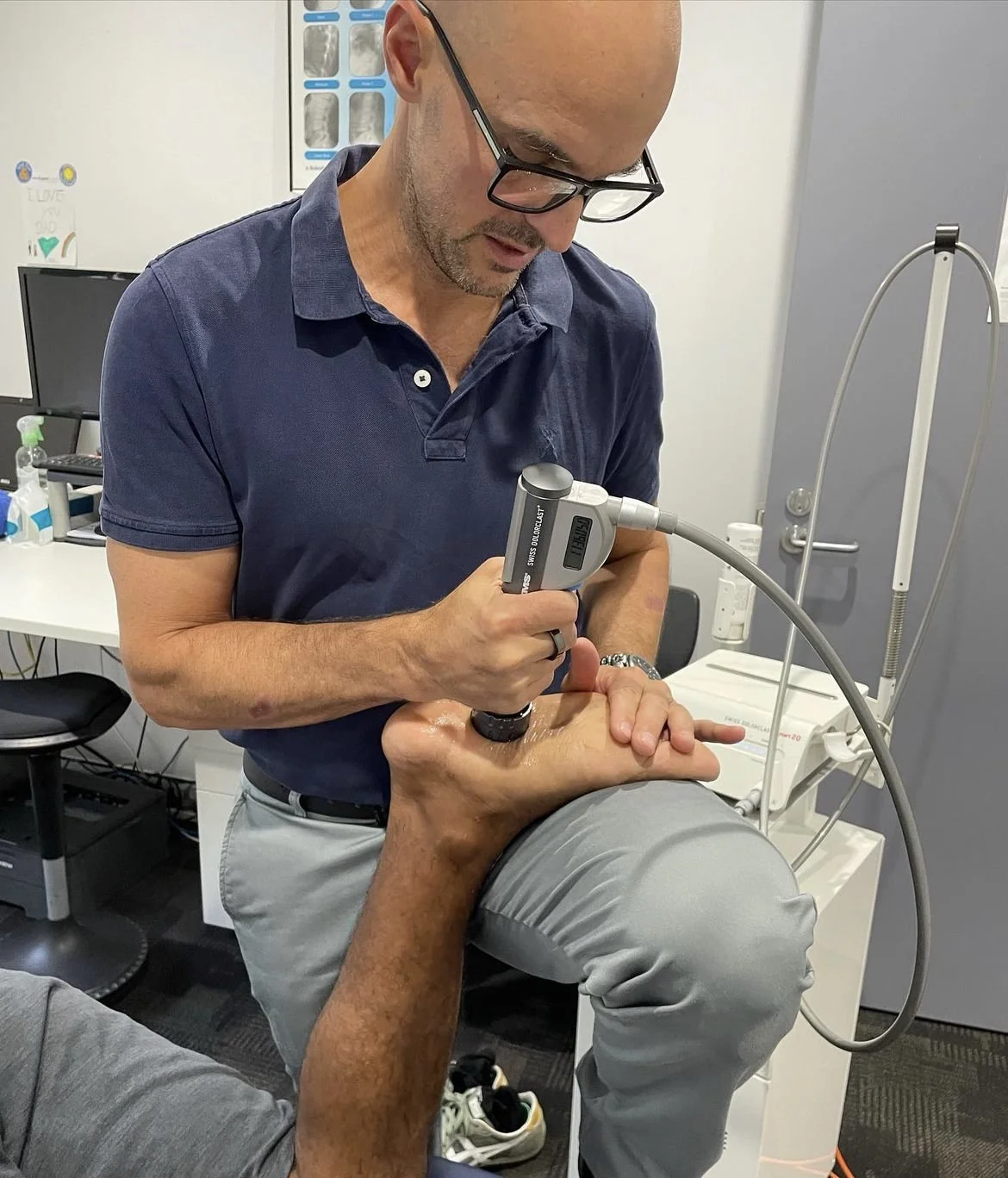
What Is Shockwave Therapy?
Shockwave therapy, also known as Extracorporeal Shockwave Therapy (ESWT), is a non-invasive treatment that uses high-energy acoustic pressure waves to stimulate biological responses within injured or painful tissues.
At Cammeray Chiropractic & Performance Centre, we use the advanced EMS Swiss DolorClast shockwave therapy system, a premium Swiss-engineered technology used internationally in the management of musculoskeletal injuries and persistent pain conditions.
Shockwave therapy is particularly useful in the management of certain chronic tendon disorders, including plantar fasciopathy (plantar fasciitis), Achilles tendinopathy, tennis elbow, rotator cuff tendonitis and other conditions involving chronic soft and connective tissue injuries such as hip and shoulder bursitis, muscular trigger points and adhesions.
With over 28 years of clinical experience, chiropractor Andrew Richards combines shockwave therapy with comprehensive biomechanical assessment, manual therapy and targeted rehabilitation to address both the painful tissue and the underlying factors contributing to injury.
Our approach goes beyond simply treating symptoms. We aim to identify why an injury has developed, understand the mechanical stresses contributing to the problem and develop a personalised treatment strategy to support recovery and long-term function.
advanced ems swiss dolorclast shockwave therapy
At Cammeray Chiropractic & Performance Centre, we use the Swiss DolorClast shockwave therapy system, developed by EMS in Switzerland, to support the management of selected musculoskeletal injuries and persistent pain conditions.
The Swiss DolorClast system delivers radial acoustic pressure waves into targeted tissues. These mechanical impulses stimulate biological responses associated with tissue remodelling and pain modulation, making shockwave therapy a valuable treatment option for certain chronic tendon disorders and other musculoskeletal conditions.
Shockwave therapy is particularly useful when injuries have become persistent or have failed to respond adequately to conventional conservative management.
More Than Just Treating the Pain
What differentiates our approach is that we don’t simply apply shockwave therapy to the painful area.
With over 28 years of clinical experience, chiropractor Andrew Richards combines shockwave therapy with comprehensive biomechanical assessment to identify the underlying factors contributing to injury.
These may include altered movement patterns, joint restrictions, muscular weakness, poor loading mechanics or repetitive stresses associated with work, sport and everyday activities.
By combining advanced shockwave technology with manual therapy, corrective exercise and targeted rehabilitation, our goal is to address both the symptoms and the contributing mechanical factors, supporting improved function and longer-term recovery.
Conditions We Treat With Shockwave Therapy
At Cammeray Chiropractic & Performance Centre, we use EMS Swiss DolorClast shockwave therapy as part of a comprehensive approach to managing persistent musculoskeletal pain, tendon injuries and selected soft tissue conditions.
Shockwave therapy is particularly valuable for certain chronic tendon disorders that have not responded adequately to conventional treatment.
Our approach combines shockwave therapy with detailed biomechanical assessment, manual therapy and targeted rehabilitation to address both the painful tissues and the underlying factors contributing to injury.
Plantar Fasciitis and Heel Pain
Plantar fasciitis, also known as plantar fasciopathy, is a common cause of persistent heel pain, particularly among runners and people who spend extended periods standing or walking.
Shockwave therapy is an evidence-supported treatment option for persistent plantar heel pain, particularly when symptoms have not responded adequately to conventional conservative care.
At our Cammeray clinic, we assess foot mechanics, ankle mobility, calf function and lower limb biomechanics to identify factors contributing to excessive loading of the plantar fascia.
Our goal is to reduce pain, improve load tolerance and address the mechanical factors contributing to recurring heel pain.
Achilles Tendinopathy
Achilles tendinopathy is a common overuse condition affecting runners, recreational athletes and active individuals. Symptoms typically include pain, stiffness and reduced tolerance to walking, running or jumping.
Shockwave therapy may assist selected patients with persistent Achilles tendinopathy, particularly when combined with an appropriate progressive tendon-loading rehabilitation program.
Our assessment considers calf strength, ankle mobility, running biomechanics and training loads to identify factors contributing to excessive Achilles tendon stress.
Treatment focuses on improving tendon load tolerance, restoring function and supporting a safe return to activity.
Tennis Elbow (Lateral Epicondylitis)
Tennis elbow is a common condition involving pain around the outside of the elbow, often associated with repetitive gripping, lifting, racquet sports and occupational activities.
Despite its name, tennis elbow frequently affects people who have never played tennis.
Shockwave therapy may be considered for persistent symptoms, although research findings are mixed and it is not effective for everyone.
We combine treatment with assessment of forearm muscle function, grip strength, upper limb biomechanics and repetitive loading patterns.
Our goal is to improve pain and function while addressing the factors contributing to ongoing tendon irritation.
Patellar Tendinopathy (Jumper’s Knee)
Patellar tendinopathy commonly affects runners and athletes participating in sports involving jumping, sprinting and rapid changes of direction.
The condition develops when the patellar tendon struggles to tolerate repeated mechanical loading, resulting in pain around the front of the knee.
Shockwave therapy may be considered as an adjunct to rehabilitation in selected persistent cases, although evidence for additional benefit is inconsistent.
Our assessment examines quadriceps strength, hip and ankle mobility, lower limb alignment and movement control.
Treatment focuses on progressive tendon loading, improving lower limb biomechanics and restoring tolerance to sporting activities.
Greater Trochanteric Pain Syndrome (Gluteal Tendinopathy)
Greater trochanteric pain syndrome is a common cause of pain around the outside of the hip, frequently affecting runners, active adults and people experiencing discomfort when lying on their side.
Symptoms are often associated with irritation or reduced load tolerance of the gluteal tendons.
Shockwave therapy may provide pain relief and functional improvement for selected patients, particularly when combined with targeted exercise rehabilitation.
Our assessment focuses on hip strength, pelvic stability, gait mechanics and movement patterns that may increase compressive loading of the gluteal tendons.
The aim is to improve hip function, reduce pain and restore comfortable walking, running and everyday activity.
Calcific Shoulder Tendinopathy
Calcific shoulder tendinopathy occurs when calcium deposits develop within the rotator cuff tendons, potentially causing significant shoulder pain, stiffness and difficulty with overhead activities.
Extracorporeal shockwave therapy has demonstrated benefits in selected cases of calcific shoulder tendinopathy, particularly with focused, higher-energy treatment protocols.
Our EMS Swiss DolorClast radial shockwave system differs from the focused systems used in much of this research. We therefore assess each case individually and may recommend alternative treatment or referral when appropriate.
Our assessment considers shoulder mobility, rotator cuff strength, scapular control and cervical and thoracic spine function.
Treatment aims to improve shoulder function and address contributing mechanical restrictions.
Additional Musculoskeletal Conditions
Shockwave therapy may also be considered as part of a broader management strategy for selected patients experiencing:
Persistent rotator cuff tendinopathy
Chronic myofascial pain and muscular trigger points
Selected chronic soft tissue injuries
Other persistent tendon-related conditions
The suitability of shockwave therapy depends on the diagnosis, clinical presentation and available evidence. Not all conditions or patients are appropriate candidates.
Where indicated, treatment is combined with manual therapy, corrective exercise and rehabilitation to support improved movement and function.
WHAT TO EXPECT DURING SHOCKWAVE THERAPY
At Cammeray Chiropractic & Performance Centre, shockwave therapy is delivered as part of a personalised treatment approach rather than simply applying treatment to the painful area.
Our aim is to understand your injury, identify the factors contributing to your symptoms and develop a treatment strategy that supports lasting improvements in movement and function.
Step 1 — Comprehensive Clinical Assessment
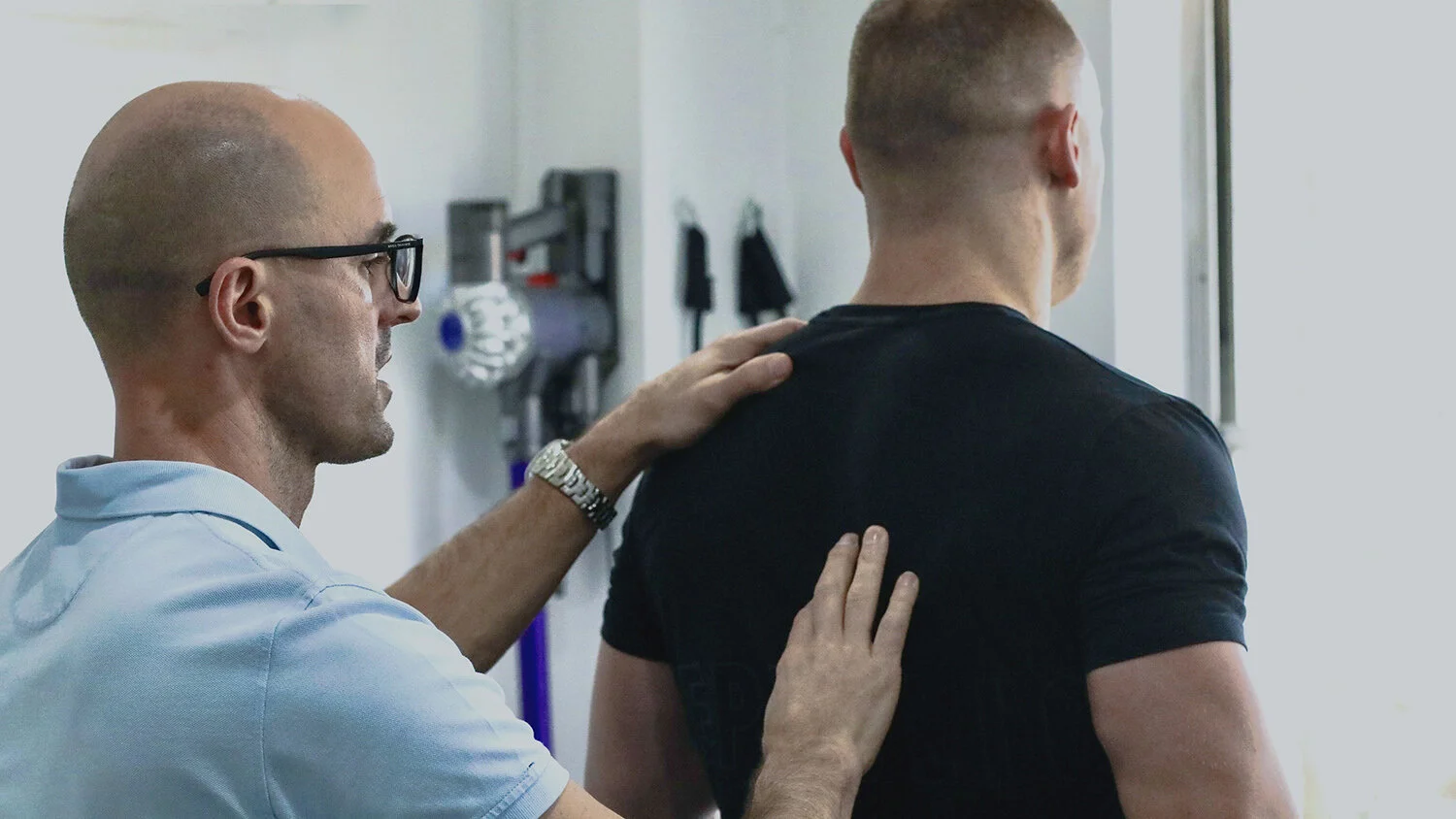
Before commencing shockwave therapy, chiropractor Andrew Richards conducts a clinical assessment to determine the nature of your injury and whether shockwave therapy is appropriate.
Depending on your presentation, this may include:
Assessment of joint mobility and muscular function.
Evaluation of posture and movement patterns.
Functional movement and biomechanical testing.
Review of training loads, occupational demands and repetitive stresses.
Identification of contributing factors that may be delaying recovery.
Where necessary, further investigations or referral may be recommended before treatment begins.
Step 2 — Personalised Shockwave Treatment
Once the appropriate treatment area has been identified, acoustic pressure waves are delivered through a handheld applicator using our EMS Swiss DolorClast radial shockwave therapy system.
A coupling gel is applied to the skin to assist transmission of the pressure waves into the underlying tissues.
Treatment intensity is adjusted according to the condition being treated, the sensitivity of the affected tissues and your individual tolerance.
Most shockwave applications take approximately 5–15 minutes, although the total appointment time may be longer when combined with assessment or other treatment.
Some discomfort may be experienced during treatment, particularly over sensitive or injured tissues. However, treatment intensity can be adjusted to maintain tolerability.
Step 3 — Addressing the Underlying Biomechanical Factors
Shockwave therapy is often only one component of a comprehensive rehabilitation program.
Where appropriate, treatment may be combined with:
Chiropractic joint mobilisation or manipulation.
Soft tissue therapy.
Corrective exercise and strengthening.
Movement retraining and biomechanical correction.
Running gait analysis.
Progressive rehabilitation and load management.
By addressing both the painful tissues and the mechanical factors contributing to injury, we aim to improve function and reduce the likelihood of recurring problems.
Step 4 — Monitoring Progress and Recovery
The number of shockwave therapy sessions required varies depending on the condition, duration of symptoms and individual response to treatment.
Some patients notice improvements relatively early, while others experience gradual changes over several weeks.
A course of approximately three to six treatments is commonly used for certain tendon conditions, although this is not a fixed protocol and individual requirements may differ.
Progress is monitored throughout treatment, with adjustments made according to your response and rehabilitation goals.
Our objective is not simply short-term symptom relief but improved tissue load tolerance, movement quality and long-term function.
Frequently Asked Questions About Shockwave Therapy
Does shockwave therapy hurt?
Shockwave therapy can produce some discomfort, particularly when treating sensitive or injured tissues.
However, the intensity can be adjusted throughout the session according to your tolerance.
Most patients are able to complete treatment without significant difficulty. Temporary soreness or tenderness may occur following treatment.
How many shockwave therapy sessions will I need?
The number of sessions depends on the condition being treated, how long symptoms have been present and your individual response.
For certain chronic tendon conditions, a course of approximately three to six sessions is commonly used, often spaced around one week apart.
Your chiropractor will discuss an appropriate treatment plan following assessment and monitor your progress throughout care.
How quickly does shockwave therapy work?
Some patients experience very early improvements in pain or mobility, while others notice more gradual changes over several weeks.
Shockwave therapy stimulates biological responses within the treated tissues, and improvements continue up to approximately 8 weeks after a course of treatment has finished.
Results vary depending on the condition, severity of symptoms and other contributing factors.
Is shockwave therapy effective for plantar fasciitis?
Extracorporeal shockwave therapy is an evidence-supported treatment option for persistent plantar fasciitis, particularly when conventional conservative management has not provided sufficient improvement.
At our Cammeray clinic, treatment is combined with assessment of foot biomechanics, calf function, ankle mobility and lower limb loading patterns.
This allows us to address both the painful plantar fascia and potential mechanical contributors to the condition.
Can shockwave therapy help Achilles tendinopathy?
Shockwave therapy may be beneficial for selected patients with persistent Achilles tendinopathy, although research findings are mixed.
It is generally considered alongside a progressive tendon-loading rehabilitation program rather than as a replacement for exercise-based treatment.
We assess calf strength, ankle mobility, running technique and training loads to develop an individualised management strategy.
Is shockwave therapy safe?
Shockwave therapy is generally well tolerated when used appropriately by a qualified healthcare practitioner.
Temporary side effects may include local soreness, redness, swelling or bruising.
However, shockwave therapy is not suitable for everyone. Certain medical conditions, medications and treatment locations may require additional precautions or make treatment inappropriate.
A clinical assessment is therefore important before commencing treatment.
Can I exercise after shockwave therapy?
This depends on the condition being treated and the intensity of your usual activities.
Light everyday activity is generally possible following treatment, but strenuous exercise or heavy loading of the treated area may need to be modified temporarily.
Your chiropractor will provide individual recommendations regarding exercise, rehabilitation and returning to sport.
Do I need a referral for shockwave therapy?
No. You can book an appointment directly with Cammeray Chiropractic & Performance Centre without a referral from your GP.
Is shockwave therapy covered by private health insurance?
Private health insurance rebates depend on your insurer, level of cover and the clinical service provided.
Shockwave therapy does not have a separate item code for insurance purposes but as it forms part of a chiropractic consultation the applicable rebate depends on your policy and the services eligible for claiming.
We recommend checking with your health fund regarding your individual entitlements.
Shockwave Therapy in Cammeray, Sydney
Take the Next Step Towards Better Movement and Recovery
If you’re experiencing persistent tendon pain, recurring sports injuries or a musculoskeletal condition that hasn’t responded adequately to conventional treatment, shockwave therapy may be an option worth exploring.
At Cammeray Chiropractic & Performance Centre, we combine advanced EMS Swiss DolorClast shockwave therapy with over 28 years of clinical experience in musculoskeletal assessment, biomechanics and rehabilitation.
Our approach focuses on identifying the underlying causes of your symptoms and developing a personalised treatment strategy designed to improve movement, restore function and support your return to the activities you enjoy.
Whether you’re a runner struggling with Achilles tendinopathy, experiencing persistent heel pain or managing a chronic soft tissue injury, we’re here to help you understand your treatment options.
Your Initial Shockwave Therapy Consultation
All new patients begin with a comprehensive 45-minute consultation with chiropractor Andrew Richards.
Initial consultation: $270 (45 minutes)
Your appointment includes:
A detailed clinical history and examination.
Assessment of the affected tissues and contributing biomechanical factors.
An individualised treatment and rehabilitation plan.
Your first EMS Swiss DolorClast shockwave therapy session, where clinically appropriate, at no additional charge.
If shockwave therapy isn’t suitable for your condition, we’ll explain the findings and discuss alternative management options.
Select “New Patient” when booking. Your initial consultation is 45min and costs $270, including your first shockwave therapy session where clinically appropriate.